
Stop Stressful Parent Conferences with These 5 Teacher-Tested Tips
Parent-teacher conferences don’t have to feel stressful! With a few smart strategies, you can turn conferences into positive, productive conversations. In this post, I share 5 proven tips—including how a quick parent call at the start of the year can make conferences run smoothly. Learn how to start with strengths, use data effectively, listen actively, and create action plans families will actually follow.
10/1/20254 min read
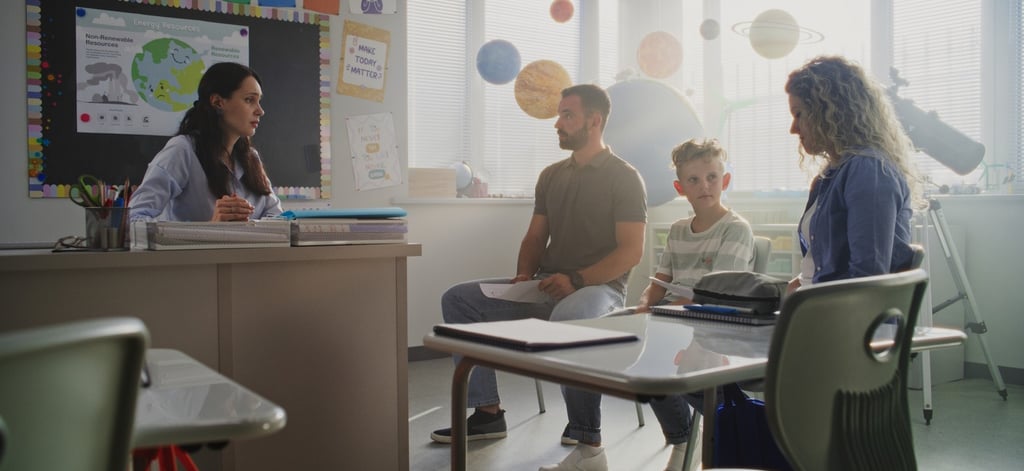

October is approaching, and you know what that means—parent-teacher conference season is around the corner. If you’ve ever spent the night before wondering which conversation might turn tense, you’re not alone. Most of us have had that one meeting where parents push back on grades or challenge every word we say.
The good news? Conferences don’t have to feel like battles. With the right strategies, they can actually become some of the most productive and rewarding conversations of the year. After years in the classroom, I’ve learned that success comes down to two things: preparation and relationships. And it all starts before conferences even appear on the calendar.
1. Build Trust Early—Before the Conference Season
One of the smartest moves I ever made was to call every parent at the beginning of the year. I’d take the roster, reach out to those with contact information on file, and introduce myself. The call was short—just a quick hello, a rundown of what we’d be focusing on in the first weeks, and a reminder of any supplies their child needed.
This small gesture worked wonders. By the time conferences rolled around, parents already knew me as more than a name on their child’s schedule. They had a point of contact, a sense of what to expect, and the reassurance that I valued their involvement.
When you establish trust early, conferences feel less like ambushes and more like updates in an ongoing partnership. Parents walk in knowing you see their child as more than a grade on a paper.
2. Start with Strengths, Always
Here’s a hard-earned lesson: diving straight into problems makes parents defensive. Early in my career, I made the mistake of listing what a student wasn’t doing well, and I could see the parent’s face tighten with every word.
Now, I begin with strengths. Not vague compliments, but specific examples. Something like, “Sarah shows great persistence in math. Last week she worked on a tough word problem for fifteen minutes and didn’t give up.”
Starting with genuine positives communicates that you recognize their child as a whole person, not just a list of deficits. Parents leave their guard down, making it easier to discuss areas for growth.
3. Use Data as a Conversation Starter, Not a Weapon
Data can either clarify or overwhelm. Instead of showing parents a wall of charts and numbers, I bring three or four key pieces of evidence. This might be a September writing sample compared with one from November, or a recent quiz alongside a previous one.
Even better, I ask parents what they notice: “What differences do you see between these two writing samples?” This shifts the dynamic from teacher-lecture to collaborative conversation. Parents become partners in interpreting progress rather than passive listeners being told what to think.
4. Listen First, Talk Second
It’s easy to walk into a conference with a set agenda, but parents often carry questions or concerns they’ve been saving for weeks. If we don’t pause to hear them, we risk missing key insights.
I now open every conference with, “What would you like to make sure we discuss today?” Then I take notes as they talk. Parents notice when you write things down—it shows their voice matters.
More often than not, I learn things I couldn’t have observed in class. One parent shared their daughter’s anxiety about making friends, which helped me see her quiet behavior in a new light. That insight completely changed how I supported her in group work.
5. Build Action Plans Together
Parents shut down when conferences end with a list of mandates: “Make sure he reads 30 minutes every night” or “She needs to memorize math facts.” Instead, I’ve found success in creating joint action plans.
I’ll ask, “What does homework time look like at your house?” or “When could reading fit naturally into your family’s routine?” Then we brainstorm solutions together.
One family, both parents working night shifts, realized mornings worked best for reading. Another family struggling with homework battles agreed that fifteen focused minutes was better than an hour of frustration.
When parents leave with a plan they helped design, they’re more invested in making it work.
6. End with Connection, Not Just Next Steps
Too often, conferences end with a handshake and a quick “Thanks for coming.” I’ve learned to close by reinforcing the partnership. I might say, “I really appreciate you sharing how much Emma enjoys our science experiments at home. That explains why she’s so engaged in lab work.”
Finally, I always leave the door open for communication: “If you notice anything at home that might help me support Jake in class, please email me. I check messages every evening.”
This small step shows parents the conversation doesn’t stop here—it’s an ongoing collaboration.
The Bottom Line: It’s About Relationships
Parent-teacher conferences don’t have to be stressful. When we build relationships from the start of the year, listen actively, and create solutions together, conferences become less about defending grades and more about supporting students.
If you make one change this year, try touching base with parents early. A simple phone call in August or September can set the tone for months of positive collaboration and make October conferences smooth and productive.
Every parent who walks through your door loves their child and wants them to succeed. When we approach conferences with curiosity, respect, and partnership, we transform them from dreaded obligations into opportunities for growth—for us, for parents, and most importantly, for our students.
Ready to make your next parent-teacher conference stress-free? Download the free guide now to get started! [Download Free Guide]