5 Ways Homeschoolers Can Exceed Public School Education
Can homeschooling really compete with public school? Research says yes—and often surpasses it. In this post, discover five proven strategies homeschool families use to create structured, flexible, and rigorous learning. From building community and using tech wisely to fostering deep mastery, these tips will help you give your child an education that truly shines.
10/12/2025
Five Ways Homeschoolers Can Match (and Often Exceed) Public School Education
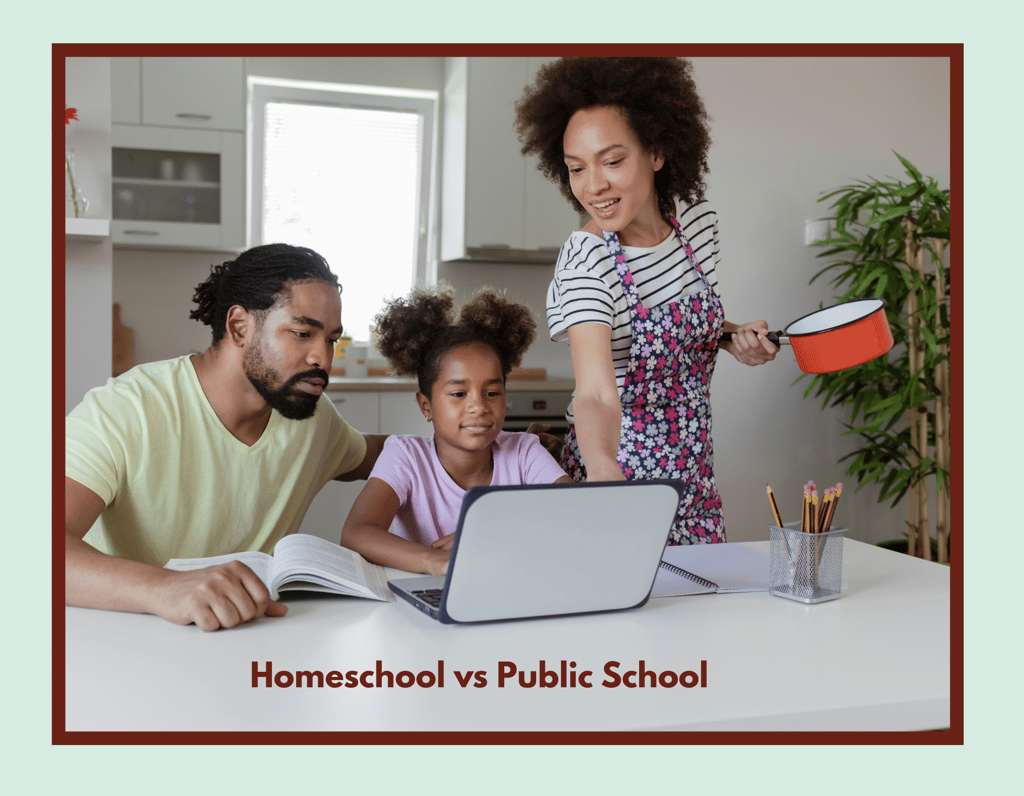
Let’s be honest—when you tell someone you homeschool, you sometimes get that look. The one that says, “Can your kitchen table really compete with a real school?”
The answer? Yes. In fact, research from the National Home Education Research Institute shows that homeschooled students often score 15–30 percentile points higher on standardized tests than public school peers. But here’s the catch: success doesn’t happen by accident. It stems from intentionally utilizing homeschooling’s flexibility.
Here are five strategies families use to not only match but often surpass what happens in traditional classrooms.
1. Build Structure with Flexibility
Public schools are strong at scope and sequence—making sure skills build systematically. Homeschoolers can do the same:
Use state standards as a guide, not a ceiling.
Keep consistent routines, but adjust when your child needs extra time or shows special interest.
Track progress with portfolios or learning logs instead of just grades.
This way you get the best of both worlds: structure and freedom.
2. Tap Into Your Community
You don’t have to do it all yourself.
Join co-ops where parents share teaching roles.
Use libraries, museums, and community colleges for classes and enrichment.
Create peer groups for projects, field trips, or just social time.
When you build an “educational village,” your child benefits from multiple perspectives and friendships.
3. Use Technology Wisely
Homeschoolers now have access to resources even many public schools can’t match:
Khan Academy, Coursera, or subject-specific programs (like Teaching Textbooks).
Adaptive platforms that adjust to your child’s level.
Virtual field trips, global connections, and live online classes.
The key is intentional use—tools should enhance learning, not babysit.
4. Hold Yourself Accountable
A common critique of homeschooling is lack of accountability. The best families build it in:
Mix assessments: projects, portfolios, standardized tests.
Invite outside eyes—competitions, dual enrollment, or teacher reviews.
Keep detailed records for growth and college prep.
High expectations + documentation show your child (and others) that their education is serious and rigorous.
5. Go Deep, Not Just Wide
Here’s homeschooling’s biggest advantage: time for true mastery.
Don’t rush—pause on hard concepts, accelerate when ready.
Blend subjects naturally (history + literature + math + science).
Follow interests deeply—marine biology, robotics, art—whatever sparks curiosity.
Use discussion and questioning to build critical thinking.
Depth creates retention, confidence, and passion for learning.
The Reality Check
Yes, homeschooling well takes commitment, creativity, and sometimes financial investment. Certain courses or social experiences will require outside solutions. But when families are intentional, the results often exceed what traditional schools can provide.
The bottom line: your kitchen table doesn’t need to compete with public school—it can surpass it. The key is treating your child’s education as your most important project, with structure, support, and purpose.
So, what feels like your biggest challenge right now: structure, accountability, or enrichment? Remember, homeschooling doesn’t require perfection—just consistent, intentional steps forward.